
Solar panels and a battery can keep parts of your home running during a power cut, but only if the system is installed for backup. A battery fitted to save on electricity bills does not automatically do that job. Before choosing one, work out what you need to keep on and make sure the quote includes the equipment and wiring to do it.
Why solar panels can switch off when the grid fails
A normal grid-connected solar system stops supplying power when the mains goes down. That is a safety feature: it must not feed electricity back onto a disconnected network. Sunny weather does not change that.
Backup equipment separates the backed-up part of your home from the grid so it can be supplied safely by the battery and compatible solar system. The inverter, switching equipment and house wiring all have to support that arrangement. Energy Saving Trust makes the distinction clearly in its solar power fact check: neither solar panels nor a battery normally provide outage power without the necessary equipment and configuration.
Start with what needs to stay on
Write down the essentials before looking at battery sizes. Fridge and freezer, some lights, the router and heating controls might be enough. An oil or gas boiler still needs electricity for its controls and pumps; keeping those running is a different job from powering electric space heating.
Essentials backup supplies selected circuits. Whole-home backup connects more of the house, but it does not mean every appliance can run together. An electric shower, cooker and EV charger can put a very different demand on the system from lights and a fridge.
Check what is actually connected to the backup supply. A socket in a room you use every day may be on a different circuit from the one being backed up. Tell us what matters at the survey, including any equipment that must not lose power.
Battery size and power output are two different things
kWh tells you how much energy is stored. kW tells you how much power the system can deliver at once. You need both figures, including the inverter's continuous backup output and any short-duration starting limit.
A large battery does not make an undersized inverter able to run a bigger load. Motors and compressors can also draw extra power when starting. Those demands need checking against the particular system, rather than adding up battery capacity alone.
How long could a battery last in a power cut?
Start with the energy available when the outage begins, not the capacity printed on the battery. Then divide it by the average demand of the circuits you are keeping on.
Available energy in kWh ÷ average demand in kW = hours, before losses.
| Average demand | Calculation | Ideal runtime |
|---|---|---|
| 0.5 kW | 8 ÷ 0.5 | 16 hours |
| 1 kW | 8 ÷ 1 | 8 hours |
| 2 kW | 8 ÷ 2 | 4 hours |
These are arithmetic examples, not measured results or a promise for an 8 kWh battery. They assume 8 kWh is available above the system's minimum discharge limit, no solar generation and a steady average load. Conversion losses, the system's own consumption, temperature and changing appliance use will affect the result. The inverter must also be able to supply the load.
Ask about the backup reserve setting too. Keeping some charge back for an outage can improve readiness, but leaves less stored energy for normal daily use. A battery that has already discharged through the evening cannot provide the same overnight backup as a full one.
What about Sigenergy and EcoFlow?
With Sigenergy SigenStor, check that the proposed installation includes the appropriate Sigen Energy Gateway and backup connections. Sigenergy's Gateway Home Series manual explains off-grid operation and the limits caused by available battery energy and load. Buying a battery tower is not, by itself, proof of a complete backup installation.
EcoFlow PowerOcean also offers backup, but the exact inverter and installation matter. For example, EcoFlow's three-phase product page describes that specific range. Its output figures should not be applied to a different single-phase model. Ask for the continuous backup rating of the model on your quote, plus the circuits it will supply.
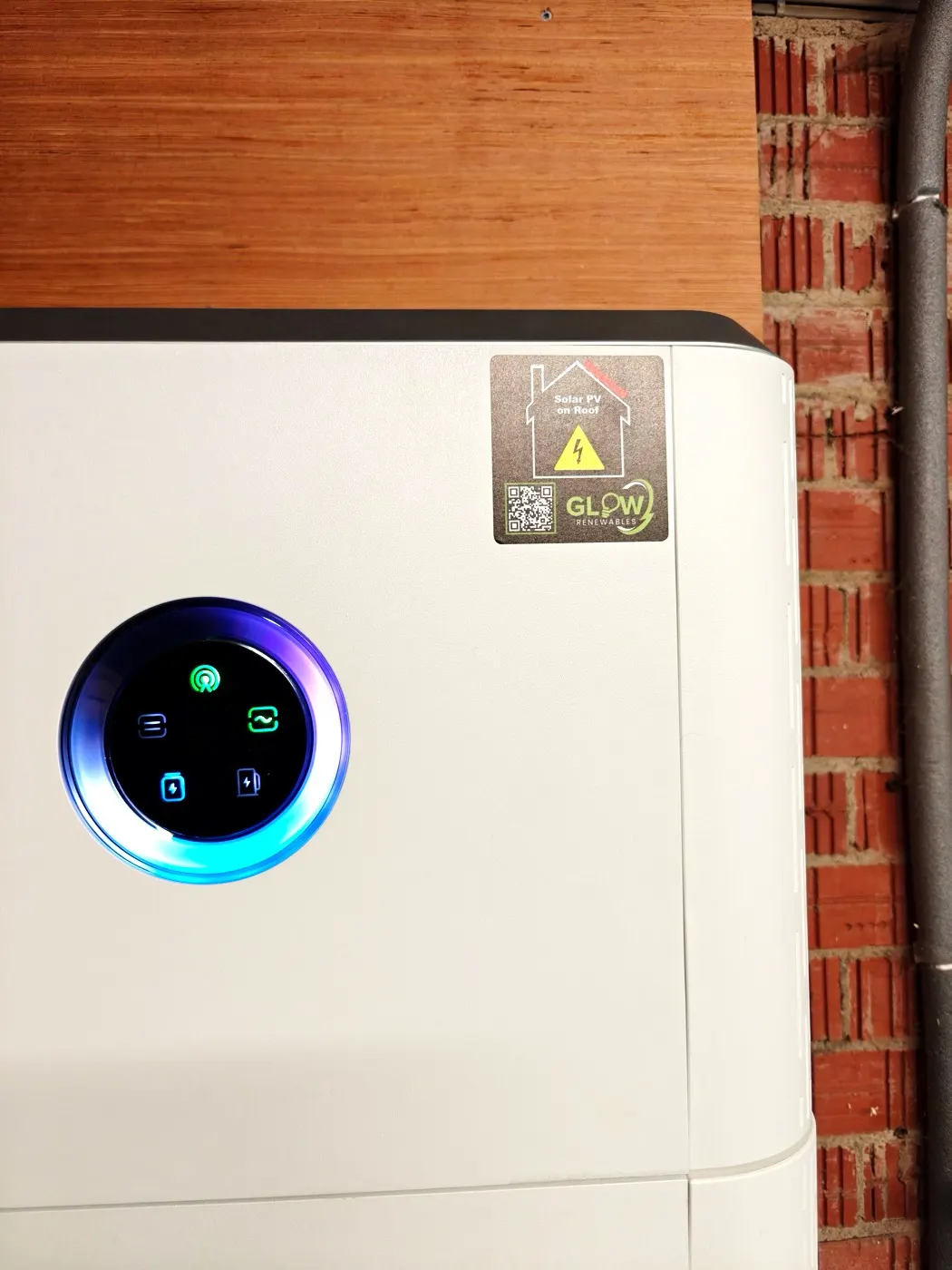
Can the panels recharge it while the power is off?
They can in a compatible backup design, with enough daylight. An existing solar inverter may not be able to operate on the backup supply, so this needs checking when adding a battery to older solar panels.
Do not plan winter backup around a full summer day's generation. Our Belfast solar modelling guide shows how output changes through the year. Ask what happens if the battery reaches its minimum charge overnight, and how that particular system restarts. For an example of why this matters, Tesla's outage guidance describes its own solar recharge, overload and low-energy behaviour; other manufacturers' procedures differ.
What should a backup quote tell you?
- Which circuits will work during an outage, and which will not.
- The battery capacity and the inverter's continuous backup output.
- Which gateway, switching equipment and electrical work are included.
- The reserve setting and runtime estimate for your chosen loads.
- Whether solar will work during an outage, including any existing inverter.
- The changeover behaviour and how to restart or get help if supply stops.
If your main aim is lower bills, compare the battery storage options. If power cuts are the concern, tell us that from the start so we can assess the backup installation as part of the same quote.