
Most people assume solar needs a south-facing roof. This east Belfast house hasn't got one — its roof faces north-east, south-east and south-west — and the design still covers about two-thirds of everything the household and their car use in a year. Here are the actual figures from the job.
A note on what these numbers are: they are the modelled design figures from PV*SOL, built on twenty years of Belfast climate data and the household's real consumption — not a measured year of output. The system was commissioned in May 2026. We publish the model because it is what the customer was shown before they committed, and we would rather you judged our design work than our adjectives. The address and the customer's name are left out for obvious reasons.
The house and the problem
A three-bedroom home off a main road in east Belfast, using about 3,000 kWh of electricity a year, with a Tesla Model 3 on the driveway adding roughly another 1,570 kWh of charging. The owner wanted solar, storage and to stop paying forecourt prices for the car.
The complication was the roof. There is no south face. There are three usable faces — north-east, south-east and south-west — all at a 40° pitch, and some shading. On paper that is the sort of roof that gets a shrug from a salesman working off a rule of thumb.
What we designed
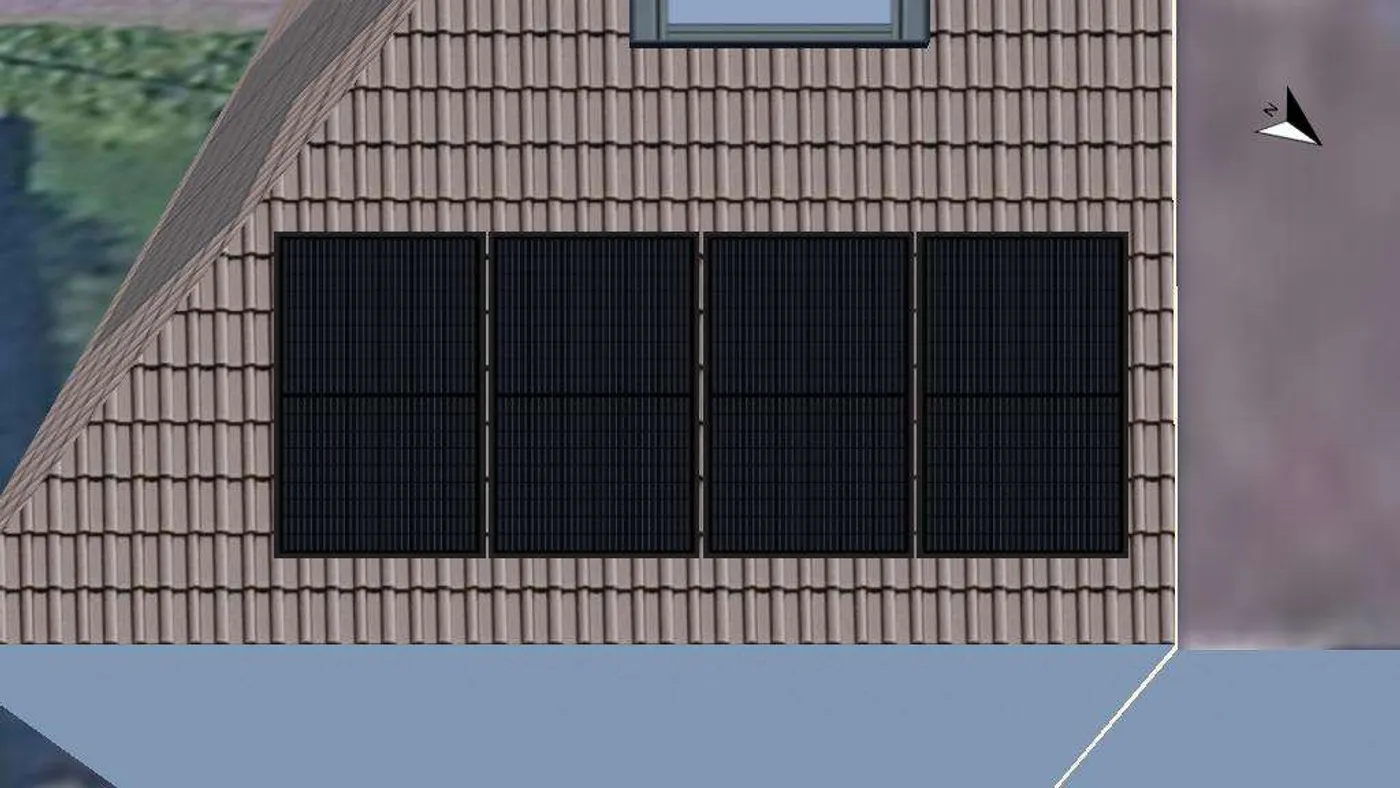
- 14 × JA Solar 450 W all-black panels — 6.3 kWp over 28 m². Split 4 on the north-east face, 4 on the south-east, 6 on the south-west.
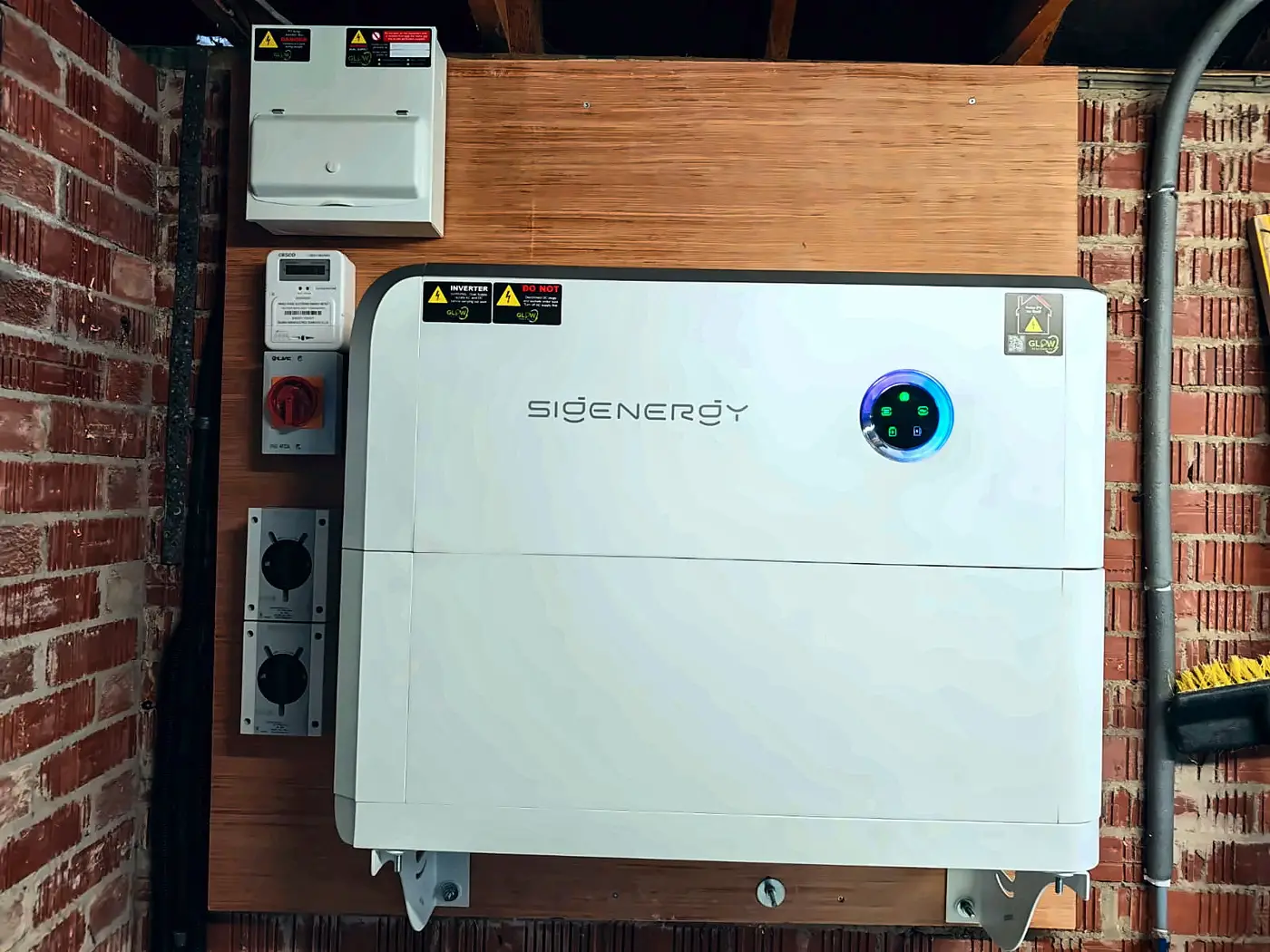
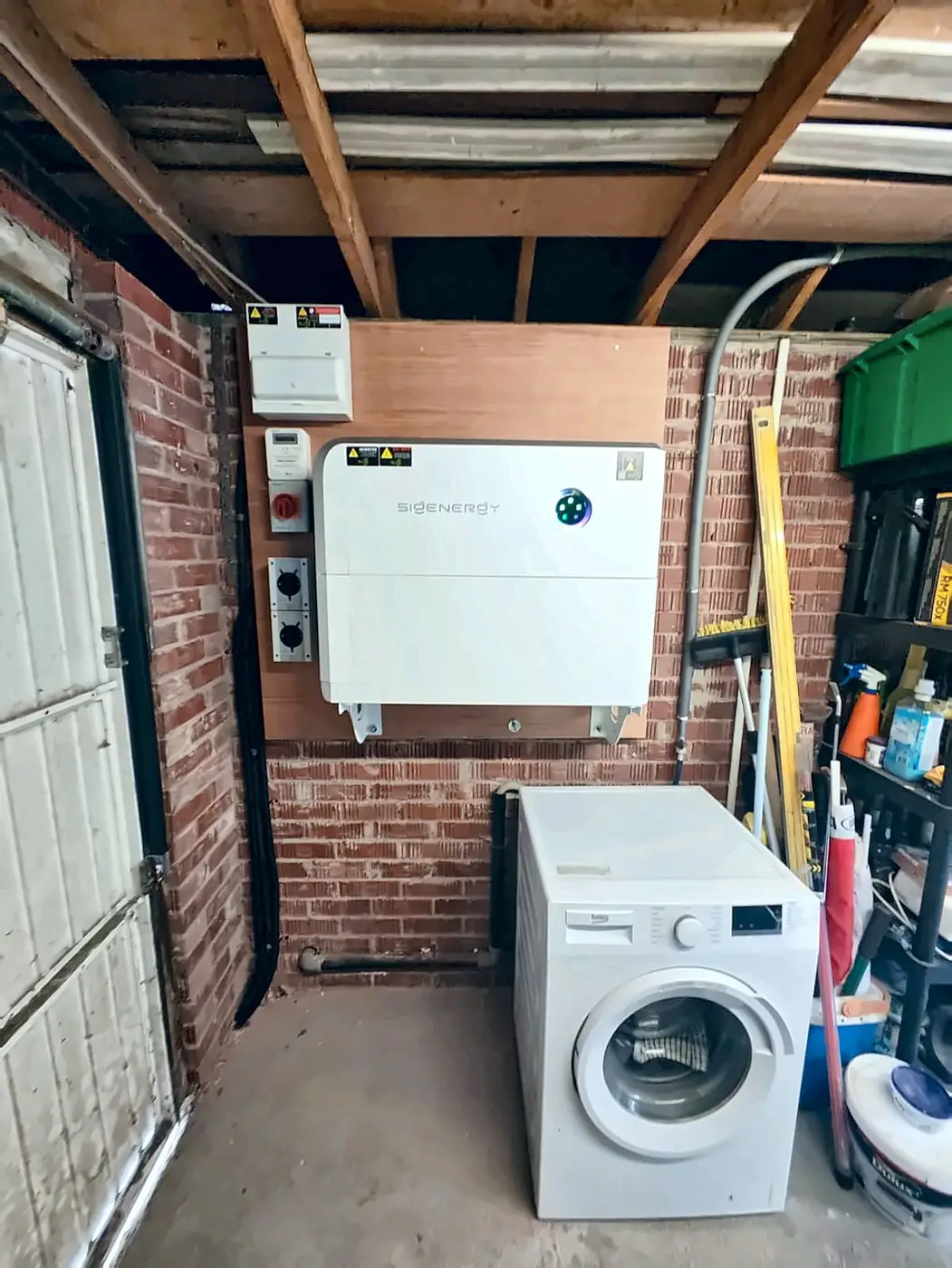
- A Sigenergy SigenStor EC 3.6 SP inverter with a 5.4 kWh BAT 5.0 battery — LiFePO4, DC-coupled, wall-mounted in the garage. See the SigenStor page for how the system stacks.
- An 11 kW charge point for the Tesla, set to prefer solar. See EV charger installation.
Splitting an array across three faces needs a compatible string layout and inverter design. This design uses two MPPT inputs across the three faces; it does not give each face an independent tracker. The north-east face catches the morning, the south-west face carries the afternoon and evening, and the peak is flatter and longer than a single south roof would give.
How we put a design together
Everything below comes out of PV*SOL, which is the simulation package we design in. It matters less that we use it than what goes into it — a design is only as honest as the inputs, and this is the order we work in.
- Build the actual house in 3D. Real roof geometry, real pitches, the neighbouring buildings and the trees placed where they stand. Not a rectangle and an assumption.
- Model every roof face separately. This job has three — north-east, south-east and south-west — each with its own orientation, pitch, usable area and panel count. A single "6.3 kWp system" figure hides all of that.
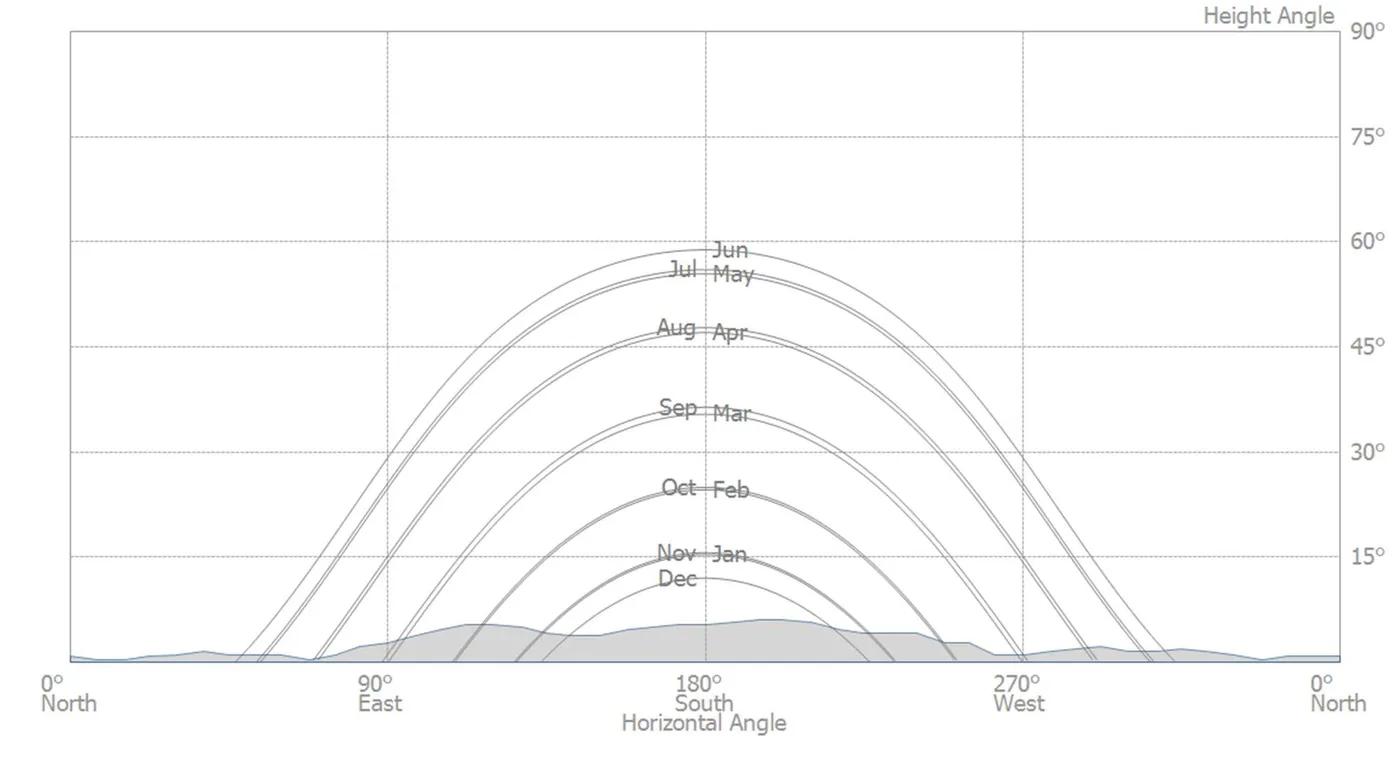
- Run the shading. The sun's path across the year is plotted against the site's own horizon, so losses from the trees and the neighbouring roofs land in the yield figure rather than in a footnote. Here it costs 4.2%.
- Use twenty years of Belfast weather. Meteonorm climate data for Belfast, 2001–2020, at hourly resolution — not a UK average.
- Model consumption, including the car. The household's real usage, plus the Tesla as its own load with its battery size, weekly mileage and charger power.
- Map the inverter to the faces. On this job the two MPPT inputs take 4+4 on one and 6 on the other, so two faces share a tracker. Separate trackers can limit electrical interaction between groups, but do not remove shading losses.
- Simulate the year hour by hour, then — and only then — work out the money.
The financial page is the last thing we produce, not the first. If a quote leads with a payback figure and can't show you the roof faces, the shading and the consumption behind it, that number is decoration. Ask to see these.
The numbers
| Array | 6.3 kWp, 14 panels, three roof faces, 40° pitch |
|---|---|
| Modelled generation | 4,772 kWh a year (766 kWh per kWp) |
| Performance ratio | 83.6% — after a 4.2% loss to shading |
| Used directly in the house | 2,141 kWh |
| Put into the car | 1,005 kWh |
| Through the battery | 1,124 kWh |
| Exported to the grid | 1,626 kWh |
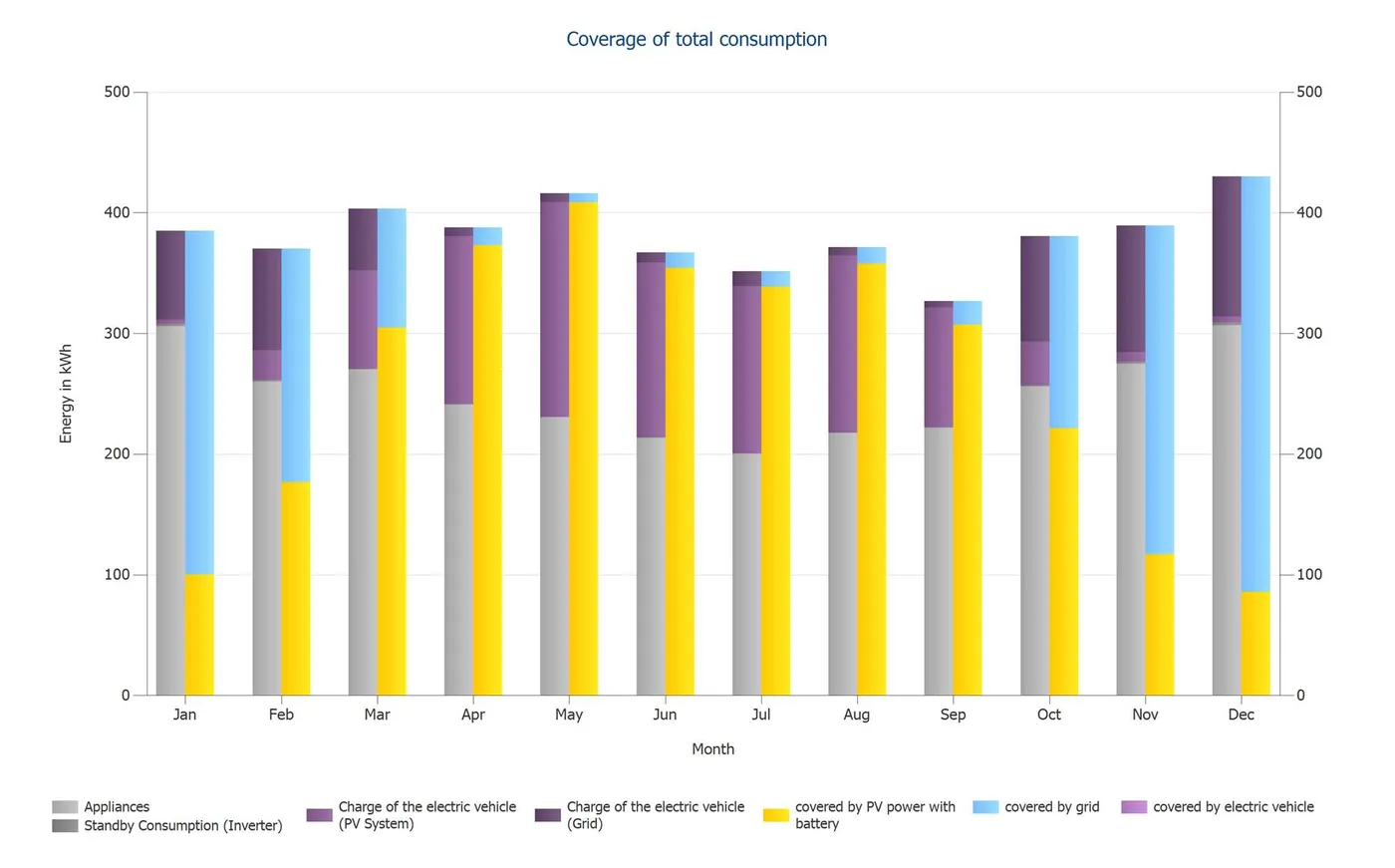
| Total household + car demand | 4,578 kWh a year |
| Met by solar and battery | 3,146 kWh |
| Still bought from the grid | 1,432 kWh |
| Self-sufficiency | 68.7% |
| Carbon avoided | 1,023 kg a year |
Two-thirds of everything that house and car consume, on a roof with no south face. That is the headline worth taking from this.
Why the split roof did better than expected
For a like-for-like comparison of roof directions, see our Northern Ireland solar panel orientation guide, with Belfast modelled graphs and an explanation of shading and optimisers.
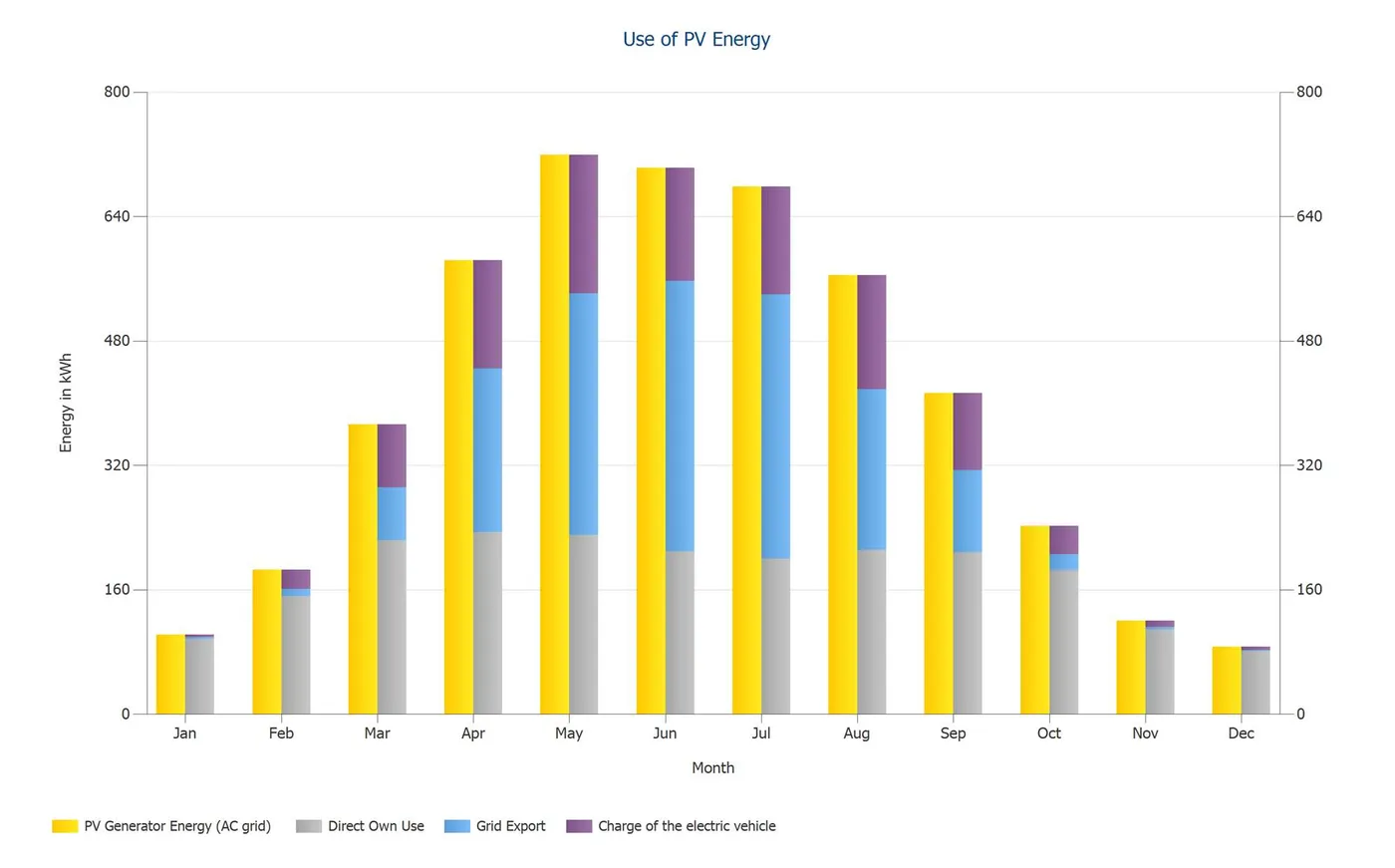
A single south-facing array produces a tall, narrow spike around midday. A lot of that spike lands when nobody is using anything, so it goes to the grid at the export rate. An east-and-west spread produces less at noon but more early and late — which is when a household actually cooks, washes and charges a car.
The model estimates that 65.9% of everything generated would be used on site rather than exported. It does not include a like-for-like south-facing alternative, so it cannot establish which layout would export more. Roof direction, shading and household demand all need to be assessed together.
The battery is small on purpose
5.4 kWh is modest, and deliberately so. The model shows it cycling about 1,190 kWh a year and giving back 1,124 kWh — a cycle load of 2.8%, which is why Sigenergy rate service life beyond twenty years. A bigger battery would have sat half-empty most of the year and added cost without adding much saving. We size from the consumption data, not from the price list.
It lives on the garage wall, off the floor, next to the board — the photographs above are the actual install. That is the practical argument for the wall-mounted format on a house with no plant room to spare.
The car is the quiet winner
1,005 kWh of the Tesla's annual charging comes straight off the roof. In running-cost terms the model puts travel at £2.59 per 100 km with the solar, against £5.20 per 100 km without it — roughly half. For anyone weighing up solar and an EV charger separately, that is the argument for doing them together: the car is a big, flexible, daytime load, and it is the easiest way to stop exporting cheaply.
What it cost, and what it saves — honestly
This system came to £8,552.50 installed — £1,357 per kWp, including the panels, the SigenStor, the battery, the wiring, the certification and the NIE Networks paperwork, at 0% VAT.
In the first year the model puts the electricity the household stops buying at about £1,020. On top of that is the export payment — and this is where we have corrected the report, because it matters. The report priced export at a Great Britain Smart Export Guarantee tariff, and the Smart Export Guarantee does not operate in Northern Ireland. At a Northern Ireland supplier's rate — Power NI's 9.64p per kWh for 1 October 2025 to 30 September 2026 — 1,626 kWh of export is worth about £157, not the £228 in the report.
Tariff update, 1 October 2026: Power NI’s export rate is now 11.88p/kWh for 1 October 2026 to 30 September 2027. The £157 calculation above retains the rate used at the time of the original case study; it is not a current earnings forecast. See Power NI’s published rates.
So: roughly £1,180 in the first year, and a simple payback around seven years on today's prices — sooner if electricity gets dearer, later if it doesn't. That is a less exciting number than the software produced, and it is the one we would rather you had. If you want the detail on how NI export payments actually work, we wrote it up in solar export payments in Northern Ireland.
If your roof looks like this
Don't write it off because it doesn't face south. Bring us the roof you have. We model your actual faces, pitches and shading against your actual bills and give you the figures before you commit — including when the answer is no. See solar panels in Belfast, battery storage, or what we do across Belfast.
Questions people ask
Do solar panels need a south-facing roof?
No. This east Belfast install has no south face at all — north-east, south-east and south-west — and the design still meets 68.7% of the household's and car's annual demand. East and west faces spread generation across the morning and evening, which often matches when a house actually uses power better than a midday peak does.
Is it worth splitting panels across several roof faces?
Often yes, provided the string layout, inverter limits and shading are assessed together. On this job 14 panels were split 4 / 4 / 6 across three faces and 65.9% of everything generated was used on site rather than exported.
How big a battery do I need with solar?
Smaller than most people assume. A 5.4 kWh battery on this system cycles about 1,190 kWh a year at a 2.8% cycle load. Oversizing adds cost without adding saving — we size from your consumption data, not from a price list.
Can solar charge an electric car in Northern Ireland?
Yes, and it is one of the best uses for it. On this job just over 1,000 kWh of the car's annual charging comes off the roof, taking modelled running costs from about £5.20 to £2.59 per 100 km.
Are the figures in this case study measured or modelled?
Modelled. They are the PV*SOL design figures produced before installation, using twenty years of Belfast climate data and the household's real consumption — not a measured year of output. We have corrected the export income to the actual Northern Ireland rate, because the report used a Great Britain tariff that does not apply here.